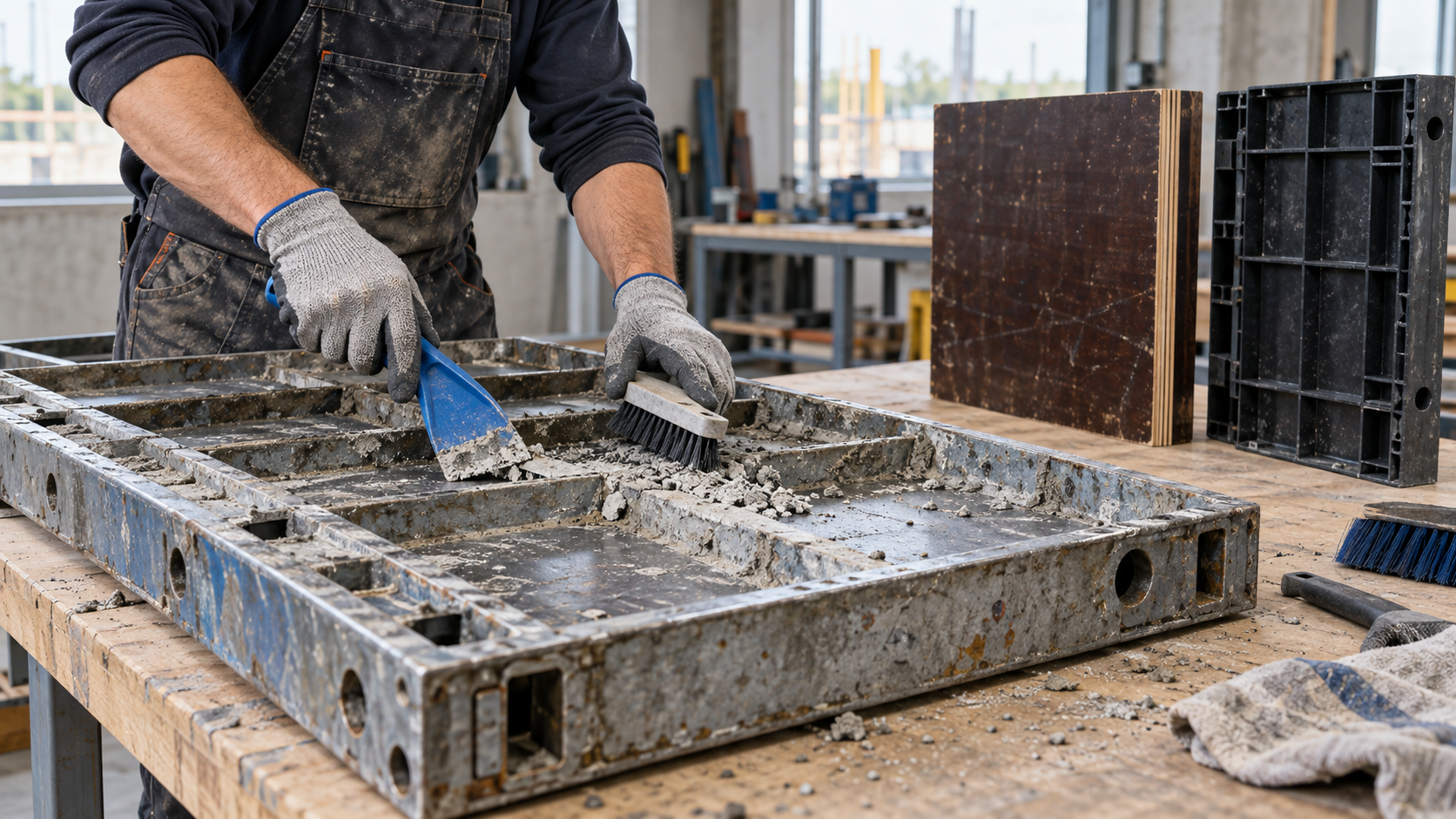
Cleaning a formwork panel after concrete sticks to it is not a matter of scraping harder until the surface looks bright. The goal is to remove cement residue while keeping the form face, coating, geometry, and release behavior intact.
The right method depends on what the panel is made of and what happened during stripping. Hardened paste on a steel panel is not the same problem as a damaged film on plywood or residue trapped in a plastic form. If the wrong tool or cleaner is used, the cleaning operation can create a second defect that appears on the next pour.
This guide gives a practical sequence for steel, film-faced plywood, plastic, coated, and repaired formwork. It should be used with the panel manufacturer’s instructions, the approved site chemicals, and the project’s safety procedure. For the original diagnosis of the sticking event, start with Concrete Sticking to Formwork: Causes, Diagnosis, and Fixes.
First, Do Not Clean by Force
Before choosing a scraper, answer four questions:
- Is the residue loose cement paste, hard concrete, an old release-agent film, or a damaged coating?
- Is the contact face steel, coated steel, film-faced plywood, plastic, or a repaired surface?
- Is the problem local to a joint, corner, weld, repair, or overlap zone, or does it cover the whole panel?
- Does the panel need to return to service immediately, or can it be isolated for inspection and repair?
Take photos of both the concrete side and the formwork side before cleaning. Record the panel material, release-agent product, dilution, time from spraying to casting, stripping time, and the location of the residue. These records help distinguish a cleaning problem from a compatibility or process problem.
If the residue is deep, the contact face is torn, the panel is deformed, or the coating has separated, stop repeating the same pour. A panel that looks clean from a distance may still have a rough or chemically altered contact surface.
A Safer Cleaning Sequence
1. Isolate and inspect the panel
Move the affected panel to a controlled cleaning area where loose fragments cannot fall back onto prepared forms. Check edges, joints, bolt holes, welds, corners, and repaired zones. These locations often collect residue and are also easy to damage.
2. Remove loose residue without attacking the face
Start with a soft brush, vacuum, plastic scraper, or wooden tool. Work from the edge of the residue toward the center rather than levering against the contact face. The first pass should remove loose pieces, not polish the panel.
Do not use a steel chisel, angle grinder, wire wheel, or sharp metal bar as the default tool. These tools may remove a thin layer of residue quickly, but they can also cut the form face, expose steel, tear a film, or create a texture that changes release behavior.
3. Soften only when the material allows it
If cement residue is firmly bonded, use the cleaning method approved for that formwork material. A controlled dampening step or an approved cement-residue remover may help on suitable steel surfaces, but it should first be tested on a small non-critical area. Do not assume that a chemical safe for bare steel is safe for a coating, plywood overlay, sealant, or plastic.
Never mix an unknown cleaner with release agent. Keep the cleaning solution, rinse water, and release-agent equipment separate.
4. Rinse or wipe away the cleaning residue
After the cement material has been loosened, remove the residue and cleaner rather than spreading it across the panel. Use the rinse or wipe method allowed by the panel and site procedure. Pay special attention to joints, recesses, edges, and drain holes where slurry can remain.
5. Check and inspect the contact face
The panel should be clean and stable, with no loose fibers, cleaner residue, standing water, or unexplained glossy patches. Check the moisture condition against the panel and release-agent instructions, and dry the face if they require it. Run a clean glove or a soft cloth over the surface to find rough edges and remaining particles. Inspect repaired areas separately instead of accepting the whole panel based on its average appearance.
6. Reapply release agent only after approval
Do not use a fresh coat of release agent to hide cement residue or a damaged face. Once the panel passes inspection, apply a product suitable for the actual formwork material and follow the product data sheet. If cleaning has changed the surface, use a representative mock-up or test area before returning the whole panel to production. The compatibility workflow is covered in Concrete Release Agent Compatibility Test.
Method by Formwork Material
Steel formwork
Steel panels can usually tolerate a more controlled cleaning process than absorbent materials, but the contact face still needs protection. Remove loose paste with a plastic scraper or wooden tool. For hard residue, use a method and cleaner approved for the panel’s coating and steel condition, then rinse or wipe thoroughly and dry promptly.
Check for rust, pitting, weld spatter, sharp edges, bent corners, and coating loss. A small exposed steel area can behave differently from the surrounding panel and may become a repeated sticking point. If abrasive repair is required, it should be followed by an approved surface repair and a compatibility check, not just another spray pass.
Film-faced plywood
Film-faced plywood is vulnerable to edge damage, swelling, delamination, and scratches through the overlay. Use a plastic or wooden scraper with a soft nylon pad. Avoid prolonged soaking, uncontrolled pressure washing, aggressive solvents, and metal tools on the contact face.
Clean the edges and panel joints carefully because water and residue can enter damaged areas. After cleaning, allow the panel to dry and inspect for raised fibers, lifted film, soft spots, and exposed wood. If the film is peeling or the board has swollen, more release agent will not restore the original face. Repair or replace the panel according to the project standard.
Plastic formwork
Plastic panels have low absorption, so cement residue and release agent can both remain on the surface. Use a plastic scraper, soft brush, and a cleaner approved for that plastic. Avoid sharp blades, unknown solvents, excessive heat, and abrasive pads that can create a fine scratched pattern.
After rinsing, check for trapped slurry in ribs, holes, corners, and textured areas. A plastic surface can look clean while still carrying a thin residue that changes wetting and release. Remove standing water and follow the panel and release-agent instructions for the surface condition required before reapplication.
Coated or repaired panels
Treat a coated or repaired panel as its own material condition. The repaired patch may have a different roughness, absorption, hardness, or chemical resistance from the original face. Test the cleaning method and release agent on the repaired area, not only on an undamaged section.
Quick Comparison
| Formwork material | Preferred first tools | Main risks | Check before reuse |
|---|---|---|---|
| Steel or coated steel | Plastic scraper, wooden tool, soft brush | Scratches, rust, coating loss, weld damage | Contact-face smoothness, rust, coating continuity |
| Film-faced plywood | Plastic scraper, wooden tool, soft nylon pad | Swelling, delamination, torn film, raised fibers | Moisture condition, film condition, edges, soft spots |
| Plastic | Plastic scraper, soft brush, approved mild cleaner | Scratches, solvent attack, heat distortion, trapped slurry | Surface wetting, ribs, holes, corners, condition required by instructions |
| Repaired or sealed area | Small spot test, tools approved for the repair | Incompatible cleaner, uneven roughness, local adhesion | Repair integrity and representative release test |
How to Tell Residue from Surface Damage
Residue usually has a raised edge, a different color or texture, and can be removed without changing the surrounding face when the correct method is used. Surface damage remains after residue is removed. It may appear as a scratch, peeled coating, exposed wood, pitting, deformation, or a permanently rough patch.
This distinction matters because the response is different. Residue calls for controlled cleaning. Surface damage calls for repair, replacement, or a documented acceptance decision. If the team treats damage as residue and keeps scraping, the panel can become less suitable for every subsequent pour.
Before the Next Pour
Use a short release-readiness check:
- The contact face has no cement paste, loose particles, cleaner residue, standing water, or unexplained oil film.
- Edges, joints, corners, welds, holes, ribs, and repaired zones have been inspected.
- The panel material and any coating or repair condition are recorded.
- The release agent, dilution, spray equipment, and coverage check match the approved process.
- A representative test area is accepted when the cleaning method or panel condition has changed.
Cleaning is part of the release process, not a separate cosmetic task. A panel that is clean but scratched, swollen, chemically attacked, or outside the moisture condition required by its instructions may create a new sticking or staining problem. The reliable sequence is to document the failure, clean according to the material, inspect the face, and validate the next release cycle before returning the panel to full production.